

The Model Is Not the Product: What a Breast Cancer Lab Workflow Taught Me About AI Architecture
We design AI systems assuming the model is the differentiator. But what happens when your model hits 62% accuracy on a workflow that demands >99%? And what happens when the fix has nothing to do with the model?
What you’ll see in this talk
If you build AI systems for regulated or procedure-driven work, this talk walks you through Chris Henry’s real experiment turning a breast cancer lab’s standard operating procedures into an LLM-guided routing system. You’ll follow the accuracy climb from 62% to 100%, see where local models broke, and take away why the harness around the model, not the model itself, is the actual product.
- How a breast cancer lab workflow runs end to end, and why patient privacy and 100% accuracy are non-negotiable when 0.2% error means 14 misrouted patients a week.
- Why feeding whole SOPs to an LLM fails, and how translating them into deterministic rules, skills, and worked examples raised reliability step by step.
- The lesson that LLMs are bad at deterministic checks (null checks, set membership, number ranges) but strong at judgment, so each job belongs to the right engine via an orchestrator.
- Building the harness: local inference inside the trust boundary, model swappability across a dozen models, observability with Langfuse, and cryptographically signed audit receipts.
- Why a model’s benchmark score is meaningless without its harness, shown by the same model scoring six times differently across tools.
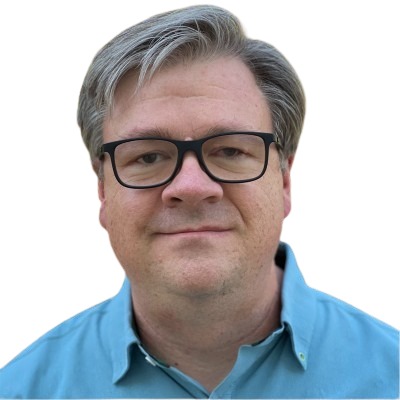

Consultant, Diagnostic & Clinical Software Systems at CHenry Ventures, LLC
Chris Henry is a technology leader and consultant specialising in diagnostic and clinical software systems, working through his own practice, CHenry Ventures, LLC. He focuses on solving real business needs with dependable systems, and has led and advised software efforts for organisations in the life sciences and diagnostics space.
Across his career he has held technology leadership and advisory roles with companies in the clinical and diagnostics sector, combining hands-on software know-how with an understanding of the regulatory and operational demands of healthcare. His consulting work ranges from software development support to fractional IT leadership for diagnostic companies.