
Hybrid model strategy
Every task goes to the model it deserves: CompactifAI for day-to-day work, Frontier for what is critical.


Scaling agents and long contexts drives spend up. The way out is routing every task to the right model and watching every token.
At Plain Concepts we have watched clients quintuple their AI spend the moment these uses go from a couple of teams to the whole organisation. And you rarely need a Frontier model to handle most of those tasks.
Once code generation, documentation, testing and chained automations are in play, consumption stops being a small line in the budget. The question is no longer whether to use AI, but on what criteria. With no routing, no token control and no FinOps, spend gets away from you before you see it coming.

Every task goes to the model it deserves: CompactifAI for day-to-day work, Frontier for what is critical.

Administration, monitoring, traceability and cost per workflow, all in a single dashboard.

On the Multiverse API, in your cloud or on your own infrastructure. Running entirely in Europe.
Most day-to-day work, such as refactors, tests, documentation and routine changes, can be handled by Multiverse Computing’s compressed models at a fraction of the cost, without reaching for a Frontier model every time. OpenAI, Anthropic, Google and the rest are kept for the work that actually needs them.
The idea, in one sentence: 8 out of 10 tasks are handled by the compressed model, and the Frontier model only steps in when it genuinely pays off.
The bulk of the work. Compressed models, fast and cheap.
Only the critical tasks that justify the cost.
Estimated annual cost for a workload of around 5 billion tokens a month (3B input and 2B output) based on public list prices.
Multiverse Computing’s models are built for regulated environments and for different deployment strategies. We can run them entirely in Europe, so your data never leaves the region. More context on the framework at EU AI Act.
Nexus, our accelerator, gives you your own platform to manage your AI models. It does not just connect them: it governs, monitors and optimises them, and turns every interaction into information to cut costs, improve performance and scale AI adoption safely across the organisation.
Plain Concepts implements and runs the layer that governs all of this. And we are customer zero: everything on this page is already in use inside Plain Concepts, across more than 700 developers, to cut our own AI bill. No theory: FinOps applied to real usage.
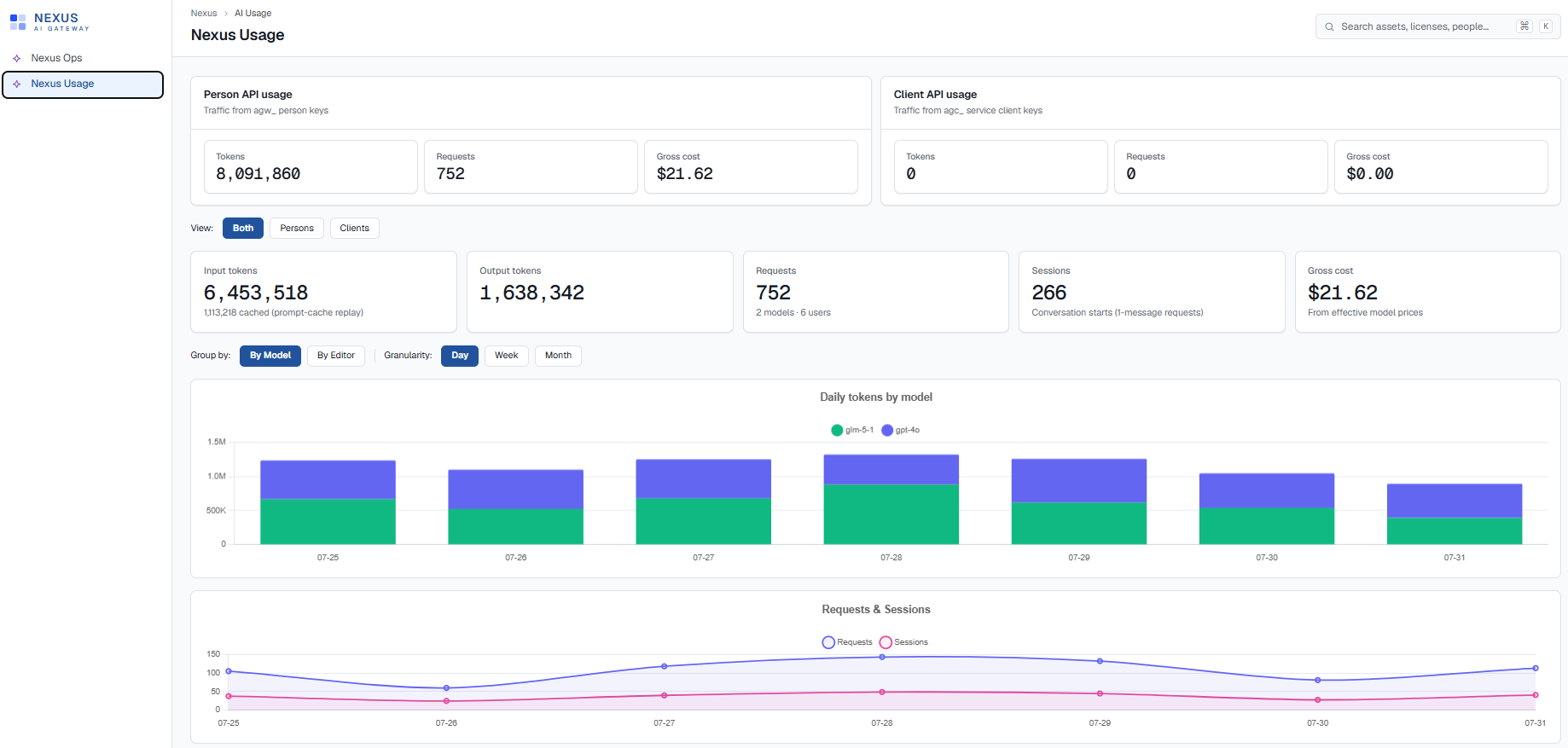
AI cannot be a black box of costs. Nexus shows consumption by model, user, project or application.
Cut the AI bill and prove the return on every LLM initiative.
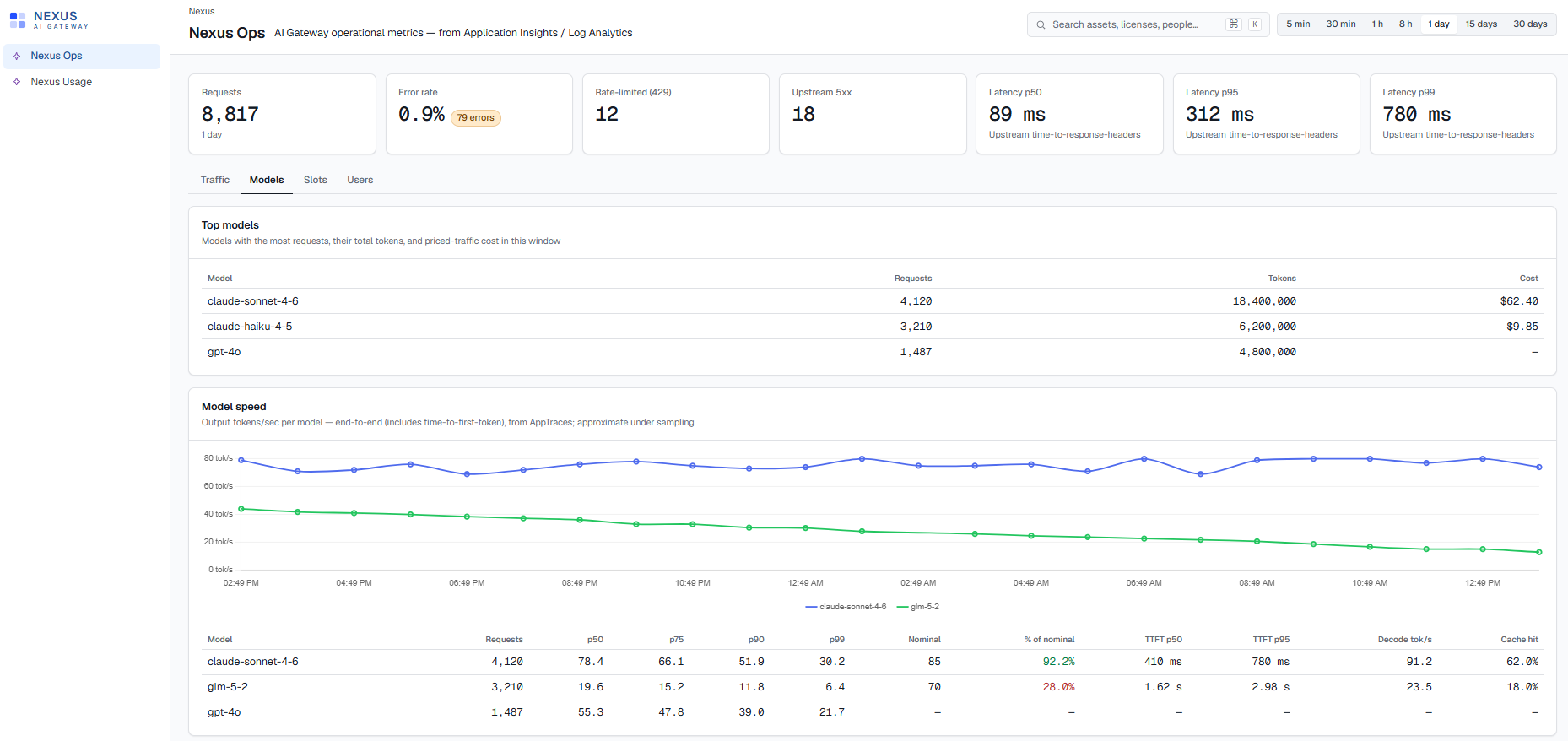
No model wins on quality, speed and cost at once. Nexus compares their real performance in production.
Cut costs without sacrificing quality and decide on data, not perceptions.
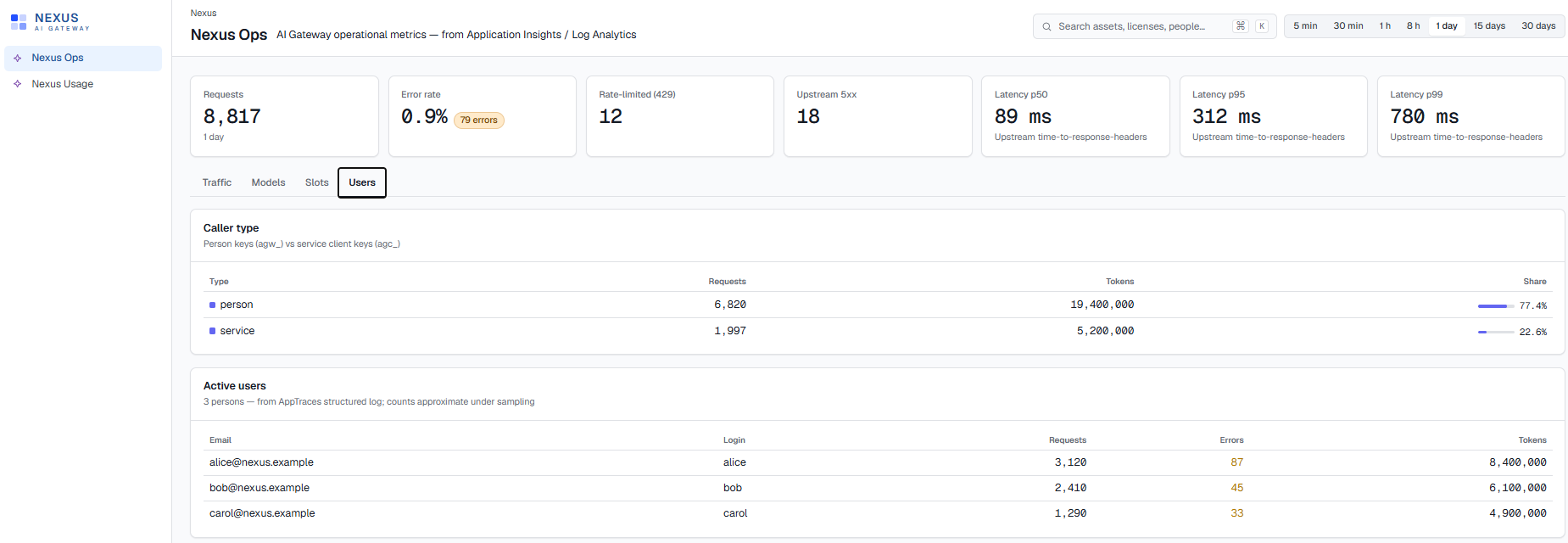
With hundreds of developers using AI daily, you need to know who does what and with which resources.
More control, compliance and costs charged where they are generated.
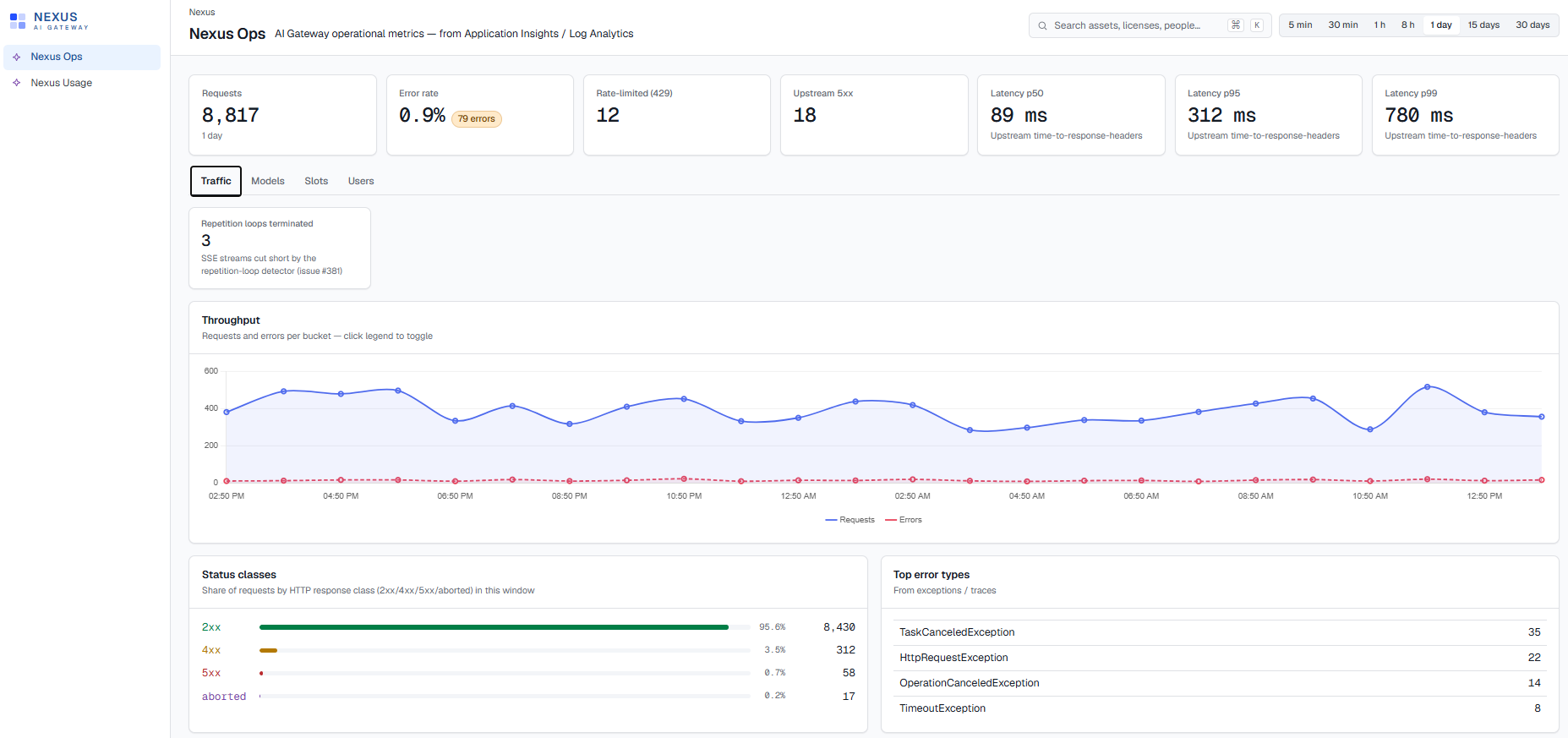
The best incident is the one that never reaches the user. Nexus watches traffic to catch anomalies and errors in time.
Lower time to resolution, higher availability and a steadier experience.
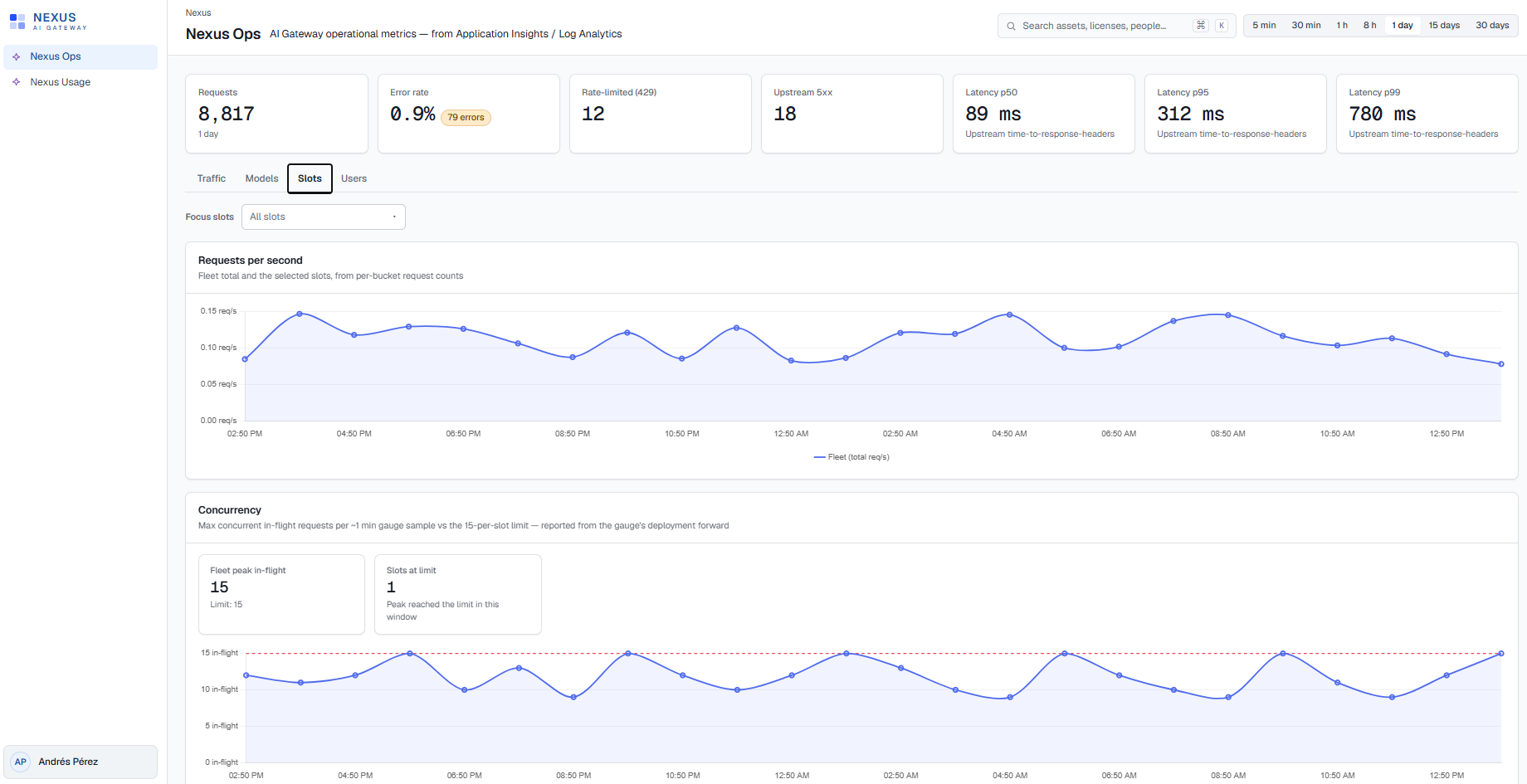
Once AI is part of the SDLC, observability stops being optional. Nexus watches the health of the whole platform in real time.
Fewer production incidents and a platform ready to grow.
We look at your current consumption, compare approaches and show you the platform in action. If you need to align the conversation internally, take the one-pager to your decision-makers.