


Plain Concepts
We are a global IT professional services company


Event summary
Microsoft Ignite 2026 took place in San Francisco and online from 17 to 20 November, with one idea running through almost every announcement: bring AI agents into everyday work and give businesses the tools to govern them, measure what they deliver and keep their cost under control.
In his opening keynote, Satya Nadella framed that vision around human ambition, control of enterprise knowledge and trust. The first day carried the headline announcements. Copilot brought Chat and Cowork together in Home and introduced Autopilot, a persistent agent with its own identity; Microsoft IQ was presented as the layer that organises a company’s context so any agent can draw on it; the new MAI models focused on the cost of each task; Agent 365 began linking AI spend to the work done; and Microsoft Perception reached general availability to coordinate security agents.
The following days took those announcements into technical detail. On 18 November, Foundry widened the options for building, running and observing agents, with voice agents and browser automation now generally available, and Microsoft and Intel extended their collaboration on Azure. On 19 November, GitHub Copilot agents arrived in Azure DevOps repositories, along with details of how Microsoft is rolling out Autopilot and managing AI spend internally. On 20 November, infrastructure closed the event with Maia 300, the next generation of Microsoft’s AI accelerator, and isolated environments for running agent-generated code.
Taken together, Ignite 2026 sketched out a platform in which each piece covers part of the agent journey: user experience, business context, models, security, cost measurement and infrastructure. Below we go through what happened each day, with their possible uses in business and the availability of each feature.
Day 1 (17 November)
The opening day carried the event’s headline announcements, presented in Satya Nadella’s keynote and in Microsoft’s official posts that day.
The evolution of Copilot accounts for several of the most visible announcements. Home brings Chat and Cowork together in a single entry point, while Office in Copilot lets users create and edit documents, spreadsheets and presentations without leaving the app. Both are now generally available.
Autopilot takes delegation further with a persistent agent that has its own identity, memory and tools. It can follow up emails, monitor Teams channels and handle recurring tasks. It is rolling out first to customers in the Frontier programme.
Workspaces, the successor to Copilot Notebooks, adds a shared space where people and agents work on files and conversations around a common goal. It is also reaching Frontier first.
Copilot Code lets users describe an app or a dashboard in natural language and have it built. Microsoft expects general availability in the coming weeks, and Copilot Managed Runtime, the environment for hosting and managing those apps, is already available.
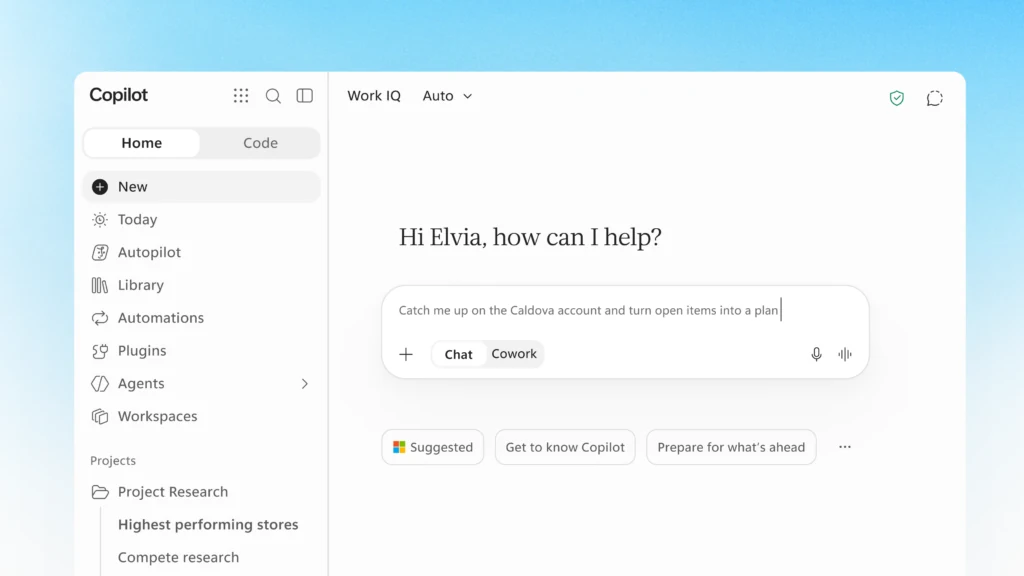
An agent needs to understand the data, rules and processes it works with. Microsoft IQ is presented as a platform that organises that context and makes it available to apps and agents.
It brings together four components. Work IQ provides context on documents, conversations and ways of working; Fabric IQ connects data, entities and business rules; Foundry IQ organises corporate knowledge; and Web IQ brings in information from the web.
New business plugins package context, skills and tools under shared governance rules. That knowledge can be reused across teams and platforms, with integration through MCP and the ChatGPT and Claude ecosystems.
Availability varies by component. Foundry IQ knowledge graphs, for example, are in preview, and Foundry IQ Serverless is due to reach general availability in December 2026.
For an organisation, our view is that this reuse can cut the work of rebuilding the same context for every project. How useful it proves will depend on the quality of the sources and on how permissions and knowledge are maintained.
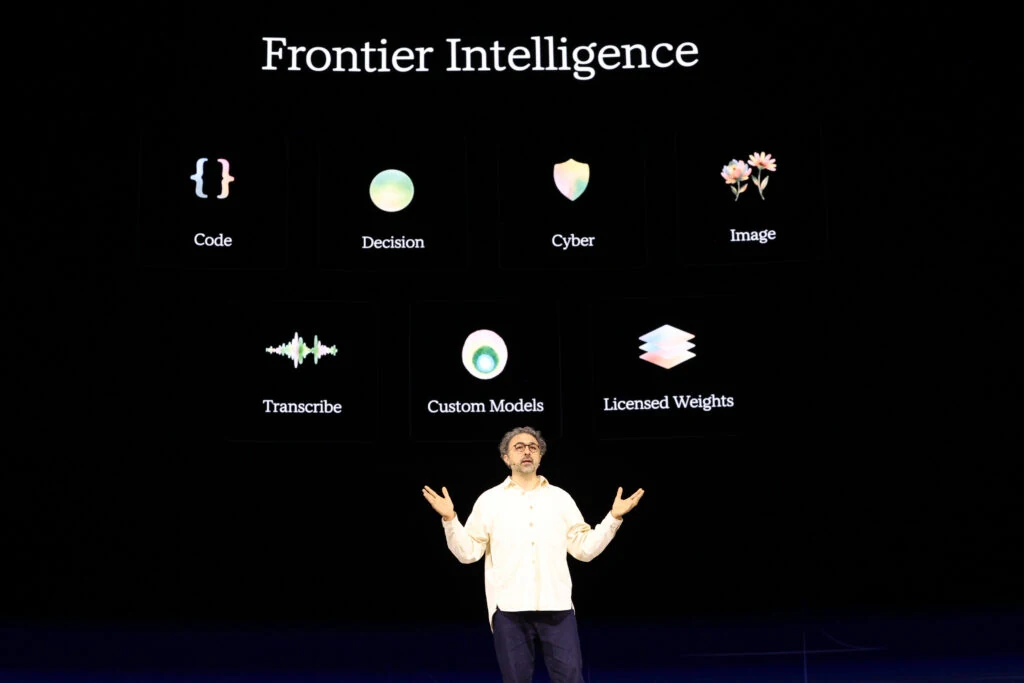
Microsoft also announced new in-house models for coding, cybersecurity, image and audio. They include MAI Code 2 and Code 2 Flash, MAI Cyber 2 Flash, MAI Image 2.7 and MAI Realtime 1.
The central argument is the balance between capability and cost. According to Microsoft’s published evaluations, MAI Code 2 reaches 98% of GPT-6.1 Sol’s performance at 40% of the price, averaged across four coding benchmarks. This is the vendor’s own comparison on those specific tests, so results on a real repository need validating in-house.
Microsoft also acknowledges that these coding models prioritise everyday business tasks and are not yet tuned for problems such as fundamental scientific research or very long-running agentic work.
Another new option is MAI Licensed Weights, which will let organisations deploy and customise Microsoft AI models with their own data in their own Azure environment and is coming soon through Frontier. Access and deployment terms form part of the technical and commercial assessment in each case.
The official round-up of the day highlights Agent 365 Business Analytics, which gives visibility of AI spend and activity, from task success rates to assisted working hours.
For businesses, linking consumption to results provides a sounder basis for deciding which automations to scale. We recommend checking assisted-time estimates against your own indicators, such as accepted tasks, corrections needed or resolution time. That way you can judge the real benefit of each process and track it consistently over time.
Microsoft Perception is now generally available as a platform that coordinates specialised security agents through playbooks.
Red team agents simulate attacks, blue team agents detect and investigate threats, and green team agents help fix and remediate issues. Security teams set the boundaries and approve the highest-impact actions.
Some specific features remain in preview alongside the generally available platform, including the Web App Pen Test Agent and some integrations through MCP and APIs.
Putting it into practice means deciding which actions each agent can take, on which systems and with what evidence. That definition is part of both the solution design and its day-to-day operation.
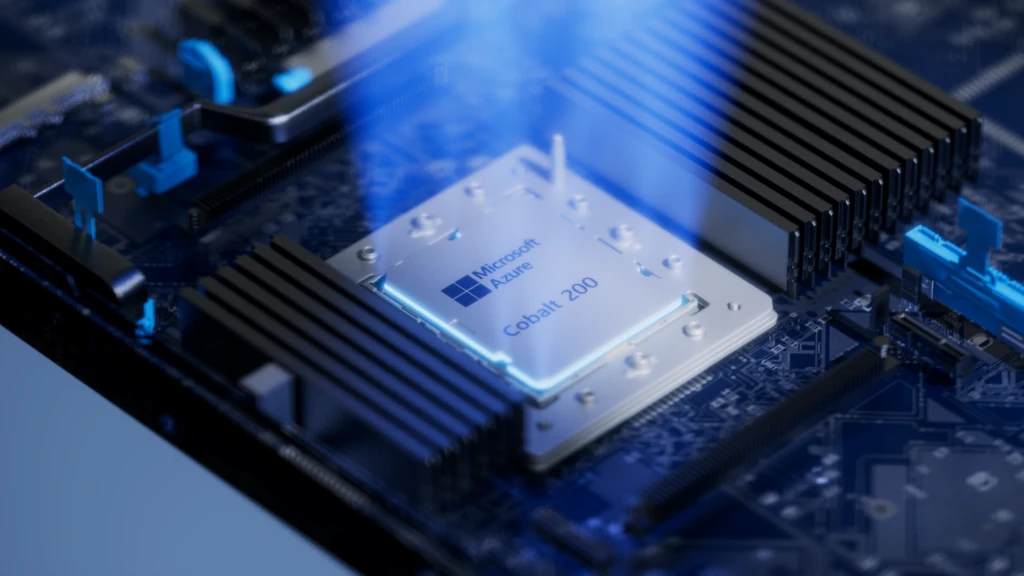
The Azure announcements include general availability of Cobalt 200 virtual machines. Microsoft cites up to 50% more CPU performance than Cobalt 100, a figure that needs reading in the context of each workload.
Azure Catalyst brings together discovery, planning, migration and modernisation of infrastructure, applications and data. Its connection with GitHub Copilot aims to carry that plan through to the code and make it easier for IT and development teams to work together.
On the data side, Azure HorizonDB is now generally available as a managed, PostgreSQL-compatible database with vector capabilities. Fabric HorizonDB is in public preview.
These announcements tie agent adoption to concrete architecture decisions: where to run workloads, how to access data and which applications need modernising to fit into new processes.
Day 2 (18 November)
The technical posts from day two set out how to build, deploy and run agents in enterprise environments. They combine features that are already available, new capabilities in preview and deployment options expected in the coming weeks.
The Foundry Agent Service round-up published on 18 November puts the Microsoft Copilot harness into public preview. Microsoft manages the agent’s execution loop and isolated environment, while teams supply knowledge, reusable skills and connected tools.
For hosted agents, network egress controls and recovery of long-running jobs are generally available. Trust in certificates from a private authority and memory snapshots remain in public preview. A public preview for running them on customers’ own AKS clusters is planned for early December.
The post on Browser Automation in Foundry describes cloud browsers with isolated sessions for working across applications and portals. The tool is generally available, together with Live View and Take control, which let users watch a run and step in, for example to sign in.
Optional session recordings, stored in the customer’s account, make it easier to review what happened. Access to private sites through VNet injection, use of your own proxy and secrets management are in preview. These capabilities matter for processes that still depend on a web interface.
Voice agents in Foundry Agent Service are now generally available. They bring the building, deployment, monitoring and evaluation of voice conversations into a single platform.
Teams can connect Foundry IQ knowledge and tools through MCP, and integrate the agents into telephony and contact centre channels, including Teams Phone, Twilio and Genesys. Traces show where in a turn a delay occurs: speech recognition, the model, a tool call or speech synthesis. Microsoft Realtime Flash 1, one of the model options announced, remains in preview.
Registering external agents in Foundry is generally available. It lets teams observe and evaluate agents that keep running outside the platform, provided they send OpenTelemetry-compatible telemetry to Application Insights. Insights and continuous evaluation of production traces are also available, while human annotation of traces remains in preview.
Alongside this, Azure Monitor sets out its unified observability for agents, in preview. It aims to follow a request across agents, models and tools to pinpoint failures, latency and consumption. That end-to-end view depends on every component exporting compatible telemetry and keeping context between calls. Support for Fabric agents is announced for December 2026.
The model router updates include Auto, in preview, which requests model selection without creating a dedicated router deployment. Each request is routed on quality, cost or a balance of the two.
Session affinity and support for the Responses and Messages APIs are also in preview. For a workflow with many calls, our view is that this routing can help control cost, provided it is evaluated on representative tasks and the quality of the end result is checked.
The joint announcement on 18 November sets out a long-term agreement covering the supply of Xeon processors, future instances with Diamond Rapids and the use of Intel Foundry’s EMIB advanced packaging technology in Azure’s own silicon.
The collaboration also covers memory efficiency with CXL, Intel QuickAssist and confidential computing. It extends the infrastructure roadmap, and adoption of each capability will depend on the virtual machines, regions and services where it becomes available.
Day 3 (19 November)
Day three brought more technical sessions than announcements. Microsoft’s official posts on 19 November explain how to deploy agents with their own identity, how to bring GitHub Copilot agents to Azure DevOps repositories and how Microsoft itself is adopting Autopilot and AI cost control.
The Foundry blog describes a model based on blueprints. A team publishes an agent template, an administrator approves it and each authorised person creates their own instance. Every agent runs with an Entra agent identity and, when it acts on Microsoft 365, with its own user account and an assigned manager.
Governance runs through Agent 365, which can switch off every agent of the same type at once. Microsoft says its employees have already built more than 30 blueprints on Foundry. The post does not say whether the model is generally available or in preview.
The Azure DevOps integration with the GitHub Copilot app is in public preview. Agent sessions can create branches, commit and open pull requests in Azure Repos repositories, and several can run in parallel. Agent Merge follows each pull request, responds to review comments, fixes CI failures and completes the merge when everything is ready.
The feature is switched on from the app’s experimental settings. Microsoft has announced, without a date, access to work items and the option to start coding sessions from them. Teams that keep their code in Azure DevOps can try these workflows without migrating repositories.
Inside Track, the blog where Microsoft explains how it adopts its own technology, details the Autopilot rollout across the company. Each agent instance has its own Entra Agent ID, mailbox and OneDrive, reports to an employee who acts as its sponsor and works through Teams, Outlook and the Copilot app.
The internal rollout is happening in phases, and customers are getting it through the Frontier programme. Microsoft plans to publish a deployment guide in early 2027.
Another Inside Track post explains Microsoft’s approach to FinOps for AI and lists the controls customers can already use: Copilot Credits limits and alerts in Microsoft 365 Cost Management, consumption controls in Power Platform and Copilot Studio, the Viva Insights consumption dashboard, the per-agent Foundry cost view in Azure Cost Management and the AI gateway in Azure API Management.
Microsoft finds that AI usage can vary by a factor of 10 to 100 between a light chat user and a heavy agent user. Our view is that AI budgets are best tracked by team and by process, with limits and alerts in place from the start.
The guide to choosing the model, mode and effort in Copilot covers automatic model selection and Cowork’s effort levels, which run from Light to Max. Model Council, which combines OpenAI and Anthropic models in Researcher, and Critique, where one model drafts and another reviews, are available through Frontier and require the administrator to enable Anthropic models.
Day 4 (20 November)
The final day turned to infrastructure. On the Azure Compute blog, Arun Kishan, Corporate Vice President of Azure Compute, set out the hardware, isolation and resilience on which Microsoft intends to run agent workloads.
Microsoft introduced Azure Maia 300, the next generation of its AI accelerator, designed as a complete system for long-context reasoning and multi-step agentic tasks. The company expects it to deliver 40% more tokens per watt than leading GPU-based systems and, in a full 96-accelerator configuration, up to seven times the rack-scale token throughput of Maia 200. The post gives no availability dates.
Cobalt 200 virtual machines are now generally available in 14 regions and are due to reach 23 by the end of 2026. Kishan also presented the new Mpsv4 (high-memory) and Lpsv5 VM types, as well as AMD Lasv5 and Laosv5 VMs with local NVMe storage for RAG and indexing, and cost options including Spot Plus and VM adaptive placement.
Serverless sandboxes in Azure Container Instances are now in public preview. They run agent-generated code in lightweight, isolated VMs that can save and restore state between tasks, and can be managed from ACI or AKS. Azure Agent Grid, in limited preview, adds identity-based network policies for each enrolled agent.
Our view is that when an agent writes and runs code, it should do so in an environment kept apart from production systems, with tightly scoped network permissions and a record of what it runs. These two pieces cover exactly that part of the architecture.
AMD Turin v7 confidential VMs arrive in gated preview and Azure Confidential Clean Rooms in limited preview. Microsoft also showcased confidential bare metal on NVIDIA Vera Rubin NVL72 and protected I/O with Intel TDX Connect, both presented as technology showcases.
On resilience, Azure Infrastructure Resiliency Manager reaches general availability, joined by a resiliency agent in Azure Copilot. Both are designed to let organisations plan and test the continuity of critical workloads, AI included, before they need it.
What these announcements mean for businesses
At Plain Concepts, our reading of these four days is that adopting agents means connecting user experience, enterprise knowledge, engineering and operations. Each announcement solves part of that journey, and the value appears when the pieces work together within a specific process.
To assess these announcements, we suggest starting with three decisions:
This approach ties in with our work in AI transformation and adoption: prioritising opportunities, validating their usefulness and building the foundations to scale with control.
The announcements and details published between 17 and 20 November widen the options available. The next step for each organisation is to choose the ones that fit its needs and test how they behave with real data, users and processes.
Plain Concepts
We are a global IT professional services company


